A welcome move by the Government, and one the textile industry has been seeking for a long time.
The temporary removal of import duty on cotton imports is a positive step for the Indian textile industry.
And the data explains why.
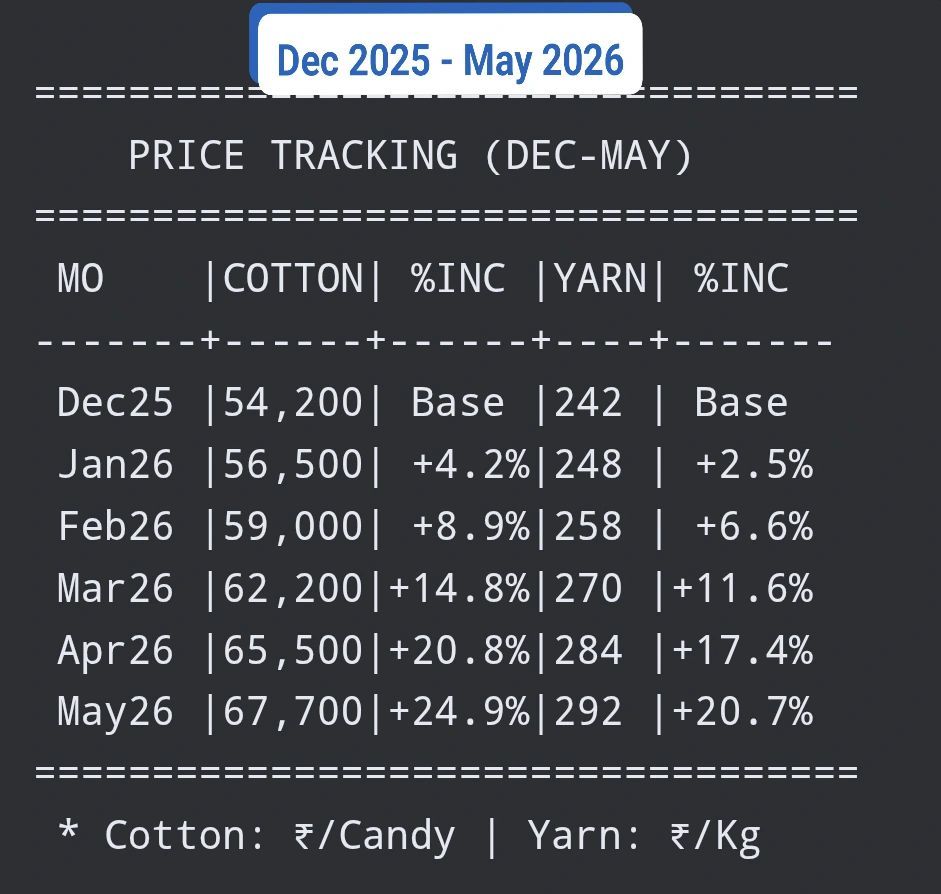
Cotton prices are up nearly 25% since December 2025, while yarn prices have risen by over 20%.
When cotton fibre becomes expensive:
– Yarn becomes expensive
– Fabric becomes expensive
– Garments become expensive
– Export competitiveness suffers
– Pressure on domestic apparel prices
And ultimately, orders move elsewhere.
Today, Indian manufacturers are not just competing with each other.
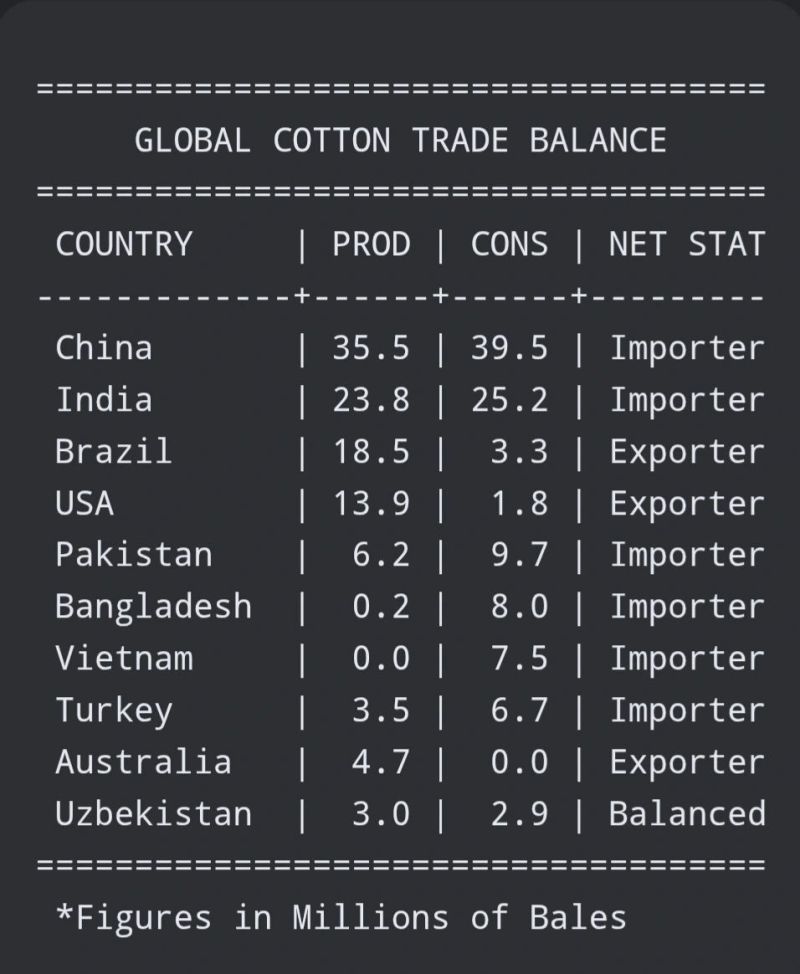
They are competing with China, Bangladesh, Vietnam and other textile-producing nations, many of whom enjoy lower raw material costs, lower operating costs, or both.
In such an environment, making the industry’s primary raw material expensive through duties works against the competitiveness of the downstream textile industry.
India today is the world’s:
2nd largest spinning capacities and
One of the largest textile ecosystems.
To support this scale, access to competitively priced cotton is critical.
What is equally important is that India should increasingly focus on exporting value-added products rather than commodities.
The real opportunity lies in:
– Fabrics
– Apparel
– Technical Textiles
– Fashion and branded products
Not merely fibre and yarn.
Every additional stage of value addition creates more employment, more exports and greater economic value for the country.
The timing of this decision is also important.
With concerns around monsoon performance and the possibility of tighter cotton availability, a proactive approach helps prevent excessive volatility in cotton prices and can act as an anti-inflationary measure for the textile value chain.
My view is simple:
Protecting farmers is important.
Supporting spinners is important.
But policy must also consider weavers, processors, garment manufacturers, exporters and brands.
A strong textile industry is not built by strengthening one link of the chain while weakening another.
It is built by making the entire value chain globally competitive.
The temporary removal of duty on cotton is therefore a welcome step.
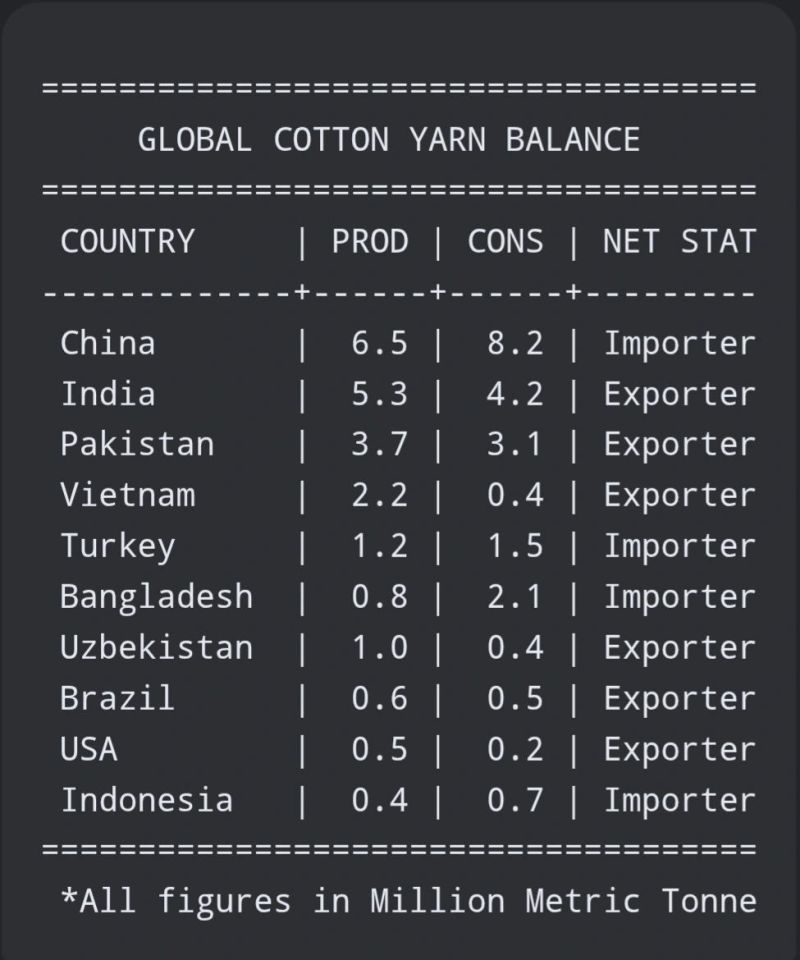
The next discussion the industry and policymakers should have is whether similar rationalisation is required for cotton yarn as well, particularly when downstream manufacturers are competing globally against countries with lower raw material and production costs.
The objective should not be cheap imports.
The objective should be a globally competitive Indian textile industry.
Because in a global market, competitiveness is not determined by just intentions.
It is determined by cost, speed, quality and reliability.