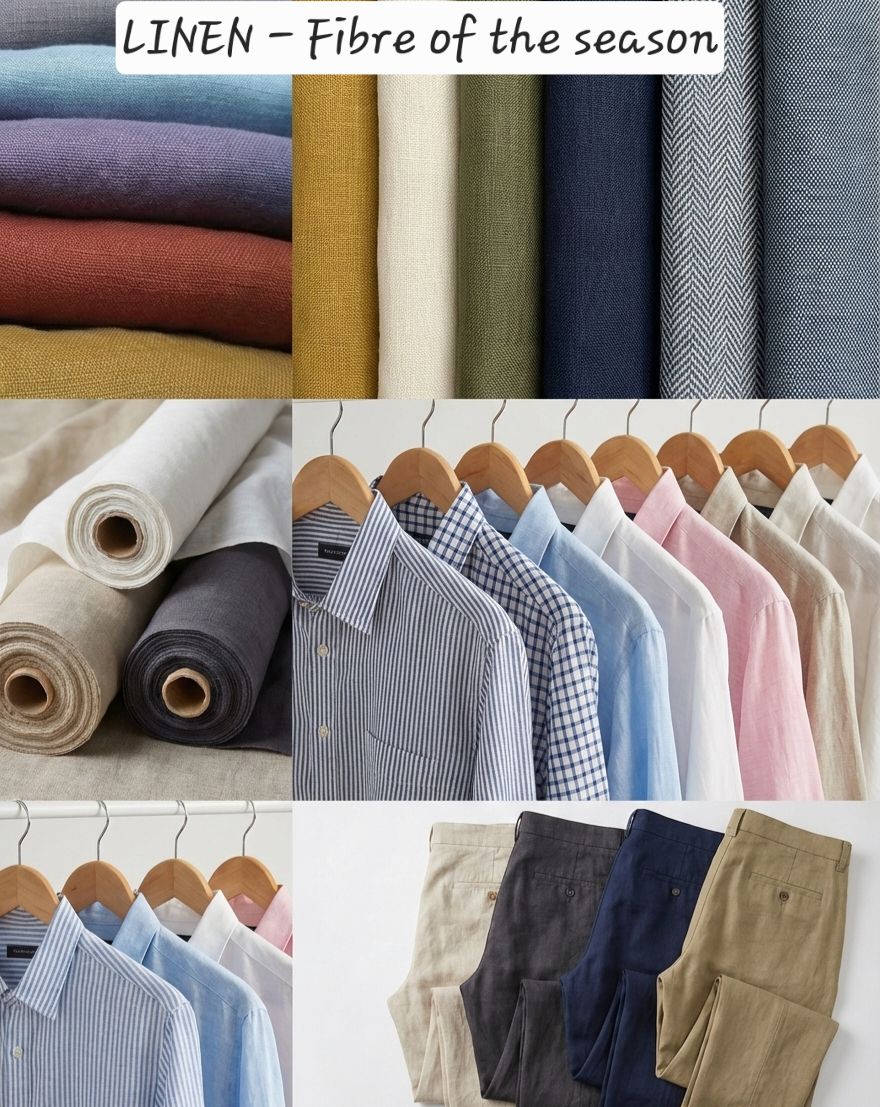
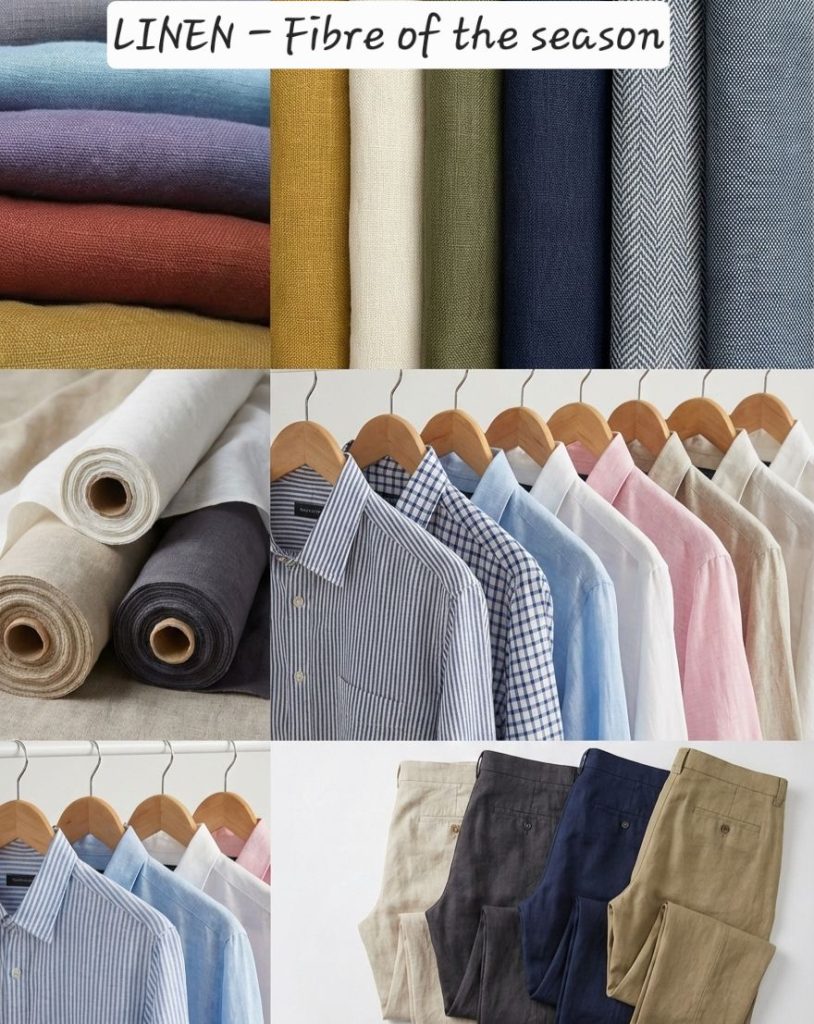
One fabric that is selling exceptionally well right now is linen.
Whether it is:
• linen shirting or suiting
• be it, pure linen (solid dyed or yarn-dyed)
• or blends with cotton, viscose and even polyester
Linen clearly, is the flavour of the season.
Yes, Summer is naturally linen’s strongest window.
But, what is surprising is the width of demand.
Today, linen is being chased by:
domestic brands | online-first brands | export buyers | value retailers | local players | even the traditional storeline trade (cut-pack and thaan-based trade)
Every segment wants a piece of linen!
Linen is ideal for warm climates because it is highly breathable, absorbs and releases moisture quickly, feels naturally cool on the skin, is durable yet premium in hand-feel, and becomes softer with use.
It’s a versatile fabric which fits in every segment – but the biggest driver is, its association with Luxury.
If this was cotton, polyester, nylon or viscose, such demand would be celebrated without much anxiety.
But linen behaves very differently.
The supply of linen yarn in India is controlled by a very small group of players.
They function like an OPEC-styled Cartel – influencing both availability and pricing.
During high demand periods:
• yarn supply tightens
• availability becomes selective
• and prices move sharply upward
The situation is further complicated by the fact that Indian linen yarn producers themselves depend heavily on European flax fibre suppliers, making the chain even more exposed to global pricing and logistics.
While a basic cotton fabric may sell at ₹100-150 per metre. In linen, prices themselves can swing by ₹100-200 per metre within a short period.
This creates three major issues:
1. Inventory becomes risky as price corrections can wipe out margins overnight.
2. Because of volatility, mills avoid large inventories. Which makes them even more dependent on yarn suppliers – and more vulnerable to sudden price hikes.
3. Planning turns reactive rather than strategic – buyers chase availability instead of designing thoughtfully, and lock prices under pressure.
The industry reality –
Linen today sits at a unique intersection:
• very strong consumer demand
• narrow raw material control
• global fibre dependency
• and extreme price sensitivity
This combination makes linen both a high-opportunity product and a high-risk product.
The takeaway for the industry:
Linen will remain a key fabric for the foreseeable future – not just as a summer option, but as a lifestyle and premium casual fabric.
In linen, more than most fibres, supply chain understanding matters as much as fabric quality.
It is not just about selling linen.
It is about Managing linen.
And that will separate the winners from the rest.